Chapter Heads


Aimee Darias-O'Hara
CMST, Curtin University
Aimee’s PhD research focuses on the acoustic ecology of Antarctic minke whales (Balaenoptera bonaerensis) in East Antarctica and Western Australia. This species produces a unique call known as a “bio-duck” which Aimee uses to detect this species in long-term acoustic datasets. These detections give insight as to the spatio-temporal trends of their acoustic presence and their vocal behaviour across East Antarctica and Western Australia.
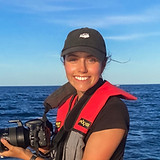
Chloe Edwards
James Cook University
Chloe's PhD research takes her to Repulse Bay in the Whitsundays, where she is investigating the behaviour, habitat use, and ecology of snubfin and humpback dolphins. Her work combines boat-based surveys, drone imagery, and photo-identification to better understand how these species use coastal habitats.
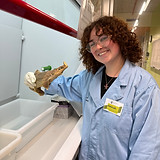
Hannah Davies
MAVE Lab, University of Wollongong
Hannah's PhD research uses decades of whale and dolphin stranding records from across Australia and New Zealand to understand how their occurrence is changing through space and time. Because cetaceans are difficult to monitor in the wild, long-term stranding data provide a valuable window into broad patterns in their distribution. She will be analysing where strandings cluster along coastlines, how patterns differ between species and ecological groups, and how environmental factors like ocean temperature and climate cycles influence these trends. By combining this data with environmental modelling, her work aims to improve our understanding of how climate change may be reshaping cetacean occurrence around Australia and New Zealand.

Jessica Buckman
University of the Sunshine Coast
Jess is commencing a PhD focused on East Australian humpback whales (Megaptera novaeangliae), investigating physiological stress, behaviour, and responses to human interactions along migration routes to better inform conservation and management strategies.

Nicholai Xuereb
CERG, Massey University
Nicholai’s PhD aims to investigate emerging evidence of nutritional stress in New Zealand common dolphins. Leveraging a 25-year tissue archive of blubber, skin, muscle, bone stomach contents and fixed tissues, Nicholai will employ a holistic approach diet, body condition, nutrition and disease to explore how prey availability, climate change, and environmental contaminants shape the nutritional and feeding ecology of common dolphins in New Zealand.

Andrew Davenport
CMST, Curtin University
Andrew is researching the behaviour and communication of pygmy blue whales (Balaenoptera musculus brevicauda) in the eastern Indian Ocean. This includes an investigation of foraging behaviour throughout the distribution of the population through biologging and satellite telemetry, and to link specific vocalisations to the social, behavioural and environmental contexts to gain a greater understanding of the function of communication patterns.

Elise Beaumont
MAVE Lab, University of Wollongong
Elise’s PhD research focuses on developing a dynamic ocean management tool to reduce humpback whale entanglement in fishing gear in New South Wales. By modelling whale migration routes, spatial overlap with fisheries, and the influence of oceanographic conditions on whale movements and entanglement risk, she aims to identify when and where whales are most vulnerable.

Ilona Sinn
MAVE Lab, University of Wollongong
Ilona’s PhD research investigates how environmental changes and human activities affect the movement and behaviour of breeding stock E1 humpback whales (Megaptera novaeangliae) in Antarctic waters, aiming to provide data-driven recommendations for conservation and marine spatial planning.

Juliette Gard
MAVE Lab, University of Wollongong
Juliette’s research focuses on establishing a baseline of population metrics for the Indo-Pacific bottlenose dolphin population in Jervis Bay. The research will estimate population abundance, describe demographic composition, assess site fidelity, and examine spatial and temporal patterns of habitat use. These outcomes will provide critical insight into population status, reproductive health, and long-term viability, strengthening conservation planning for coastal dolphins and improving the capacity to respond proactively to environmental change.

Nina Rothe
MAVE Lab, University of Wollongong
Nina's research investigates whale health in Kaikōura, New Zealand, by studying two ecologically distinct species: sperm whales, deep-diving toothed whales that forage in the region year-round, and humpback whales, migratory baleen whales that pass through Kaikōura during their northern migration. Using health indicators including body condition, respiratory microbiome diversity and scarring, she examines how whale health varies with environmental conditions and between these species with very different life histories, feeding strategies and patterns of habitat use.